English (United States)

May 7, 2025

Mandatory cloakroom fees and service charges – What operators need to know now

Mandatory cloakroom fees and service charges – What operators need to know now

A man and his eagle look stoically ahead.

Note: This article does not constitute legal advice. For legally binding information, please refer to § 146a Abs. 2 AO and the official website of the Cash Register Security Regulation (KassenSichV). For a binding legal assessment, please consult a qualified lawyer or refer to official legal sources.

Introduction

Many cloakrooms at trade fairs, clubs, event halls, or theaters still rely on a simple cash register in the form of an open cash register. However, with the introduction of the receipt obligation and the requirements of the Cash Register Security Regulation, new obligations arise that operators should urgently consider.

In particular, two questions arise: Must a receipt really be issued for every jacket? And is a technical security device (TSE) necessary in the cloakroom?

In a cloakroom, there are often small transactions with many different customers. A comprehensive receipt obligation seems not only impractical in such an environment but also unnecessary. However, the regulations are clear: the receipt obligation generally applies to all businesses, regardless of the amount involved. At the same time, electronic cash register systems that process cash must be equipped with a TSE.

In this article, we explain when an exemption from the receipt obligation is possible, what solutions exist for legally compliant operation of the cloakroom, and how modern systems can minimize administrative effort.

1. The receipt obligation in the cloakroom – must a receipt really be issued for every jacket?

Since January 1, 2020, the receipt obligation has been in force in Germany. This means that a cash receipt must be issued for every transaction, regardless of whether the customer accepts it or not. The obligation applies to all taxable businesses that use a cash register, including cloakrooms.

In practice, this means that an operator would theoretically have to create a receipt for each individual cloakroom fee – even if it is only one or two euros. The purpose of the regulation is to prevent tax evasion by ensuring that each business transaction is documented and traceable for tax authorities.

Can a cloakroom be exempted from the receipt obligation?

Yes, there is a possibility to be exempted from the receipt obligation. If a business serves a large number of unknown customers and issuing a receipt is unreasonable in practice, an exemption can be applied for.

This applies to many cloakrooms, especially in clubs, theaters, or event locations, where there can be a large number of cash transactions in a short period of time.

To obtain an exemption, an application must be submitted to the responsible tax office. The tax authorities are aware of the problems with cloakrooms and generally grant an exemption without issues. Nonetheless, individual review is required as the decision depends on the respective tax authority.

Is everything clear with an exemption from the receipt obligation?

No, even if a cloakroom has been exempted from the receipt obligation, it does not mean that no receipt needs to be issued. A customer can still request a receipt, and the operator must be able to issue one.

This means that despite the exemption, a certain documentation obligation remains. The cloakroom label alone is not sufficient as a receipt since it does not provide a tax-recognized proof of payment. The operator must be able to issue a complete receipt upon request that includes all legally required information.

This includes:

  • Name and address of the business

  • Date of receipt issuance

  • Type of service provided (e.g., "cloakroom fee for a jacket")

  • Invoice amount and applicable tax rate

In practice, this can be done handwritten on a receipt pad, but that is time-consuming and impractical. A digital cash solution can automatically generate such receipts and provide them by email or printer.

2. The open cash register in the cloakroom – an outdated method?

Many cloakroom operators still use an open cash register, where cash is stored in a drawer or box. Income and expenses are usually recorded in a cash book or Excel.

This method is still allowed, but it is associated with strict documentation obligations. Income must be recorded in writing daily, retroactive changes are not allowed, and all receipts must be kept for ten years.

Another problem is the possibility of unannounced cash audits by the tax office. The authority can conduct a cash inspection at any time to check whether the documentation meets tax requirements. Missing or inaccurate records can lead to fines or tax back payments.

For many cloakroom operators, the open cash register is therefore becoming increasingly unattractive. The alternative is digital cash systems, which allow for automatic and audit-proof recording of income.

3. TSE Obligation – when do cloakrooms need a Technical Security Device?

The Cash Register Security Regulation stipulates that electronic cash register systems that process cash must be equipped with a Technical Security Device (TSE).

A TSE ensures that each transaction is securely stored. This data must be able to be digitally presented to the tax office in the event of an audit.

A TSE is not required when:

  • An open cash register without electronic recording is used (but strict recording obligations apply).

  • Only card payments are accepted, as there is no need to document cash flow.

For operators who accept cash and use an electronic cash register, a TSE is mandatory.

Conclusion – How to make the cloakroom compliant with receipt and TSE regulations

The receipt obligation generally also applies to cloakrooms, but an exemption can be applied for at the tax office. Nevertheless, a receipt must be issued upon request by a customer.

The open cash register is still allowed, but due to strict recording requirements and potential tax audits, it is becoming increasingly impractical. Those who collect cash in the cloakroom and use an electronic cash register need a TSE to comply with legal requirements.

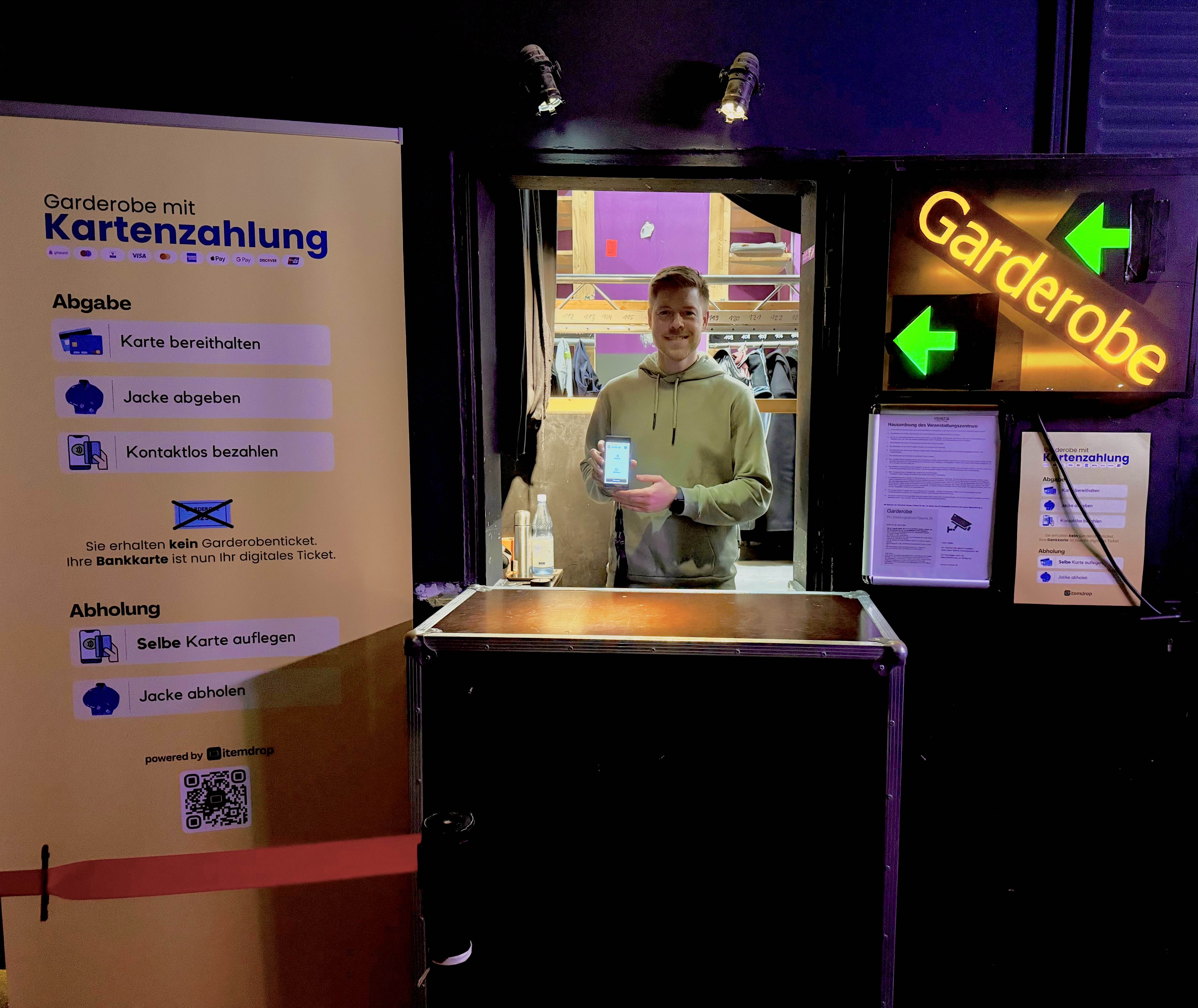
The easiest solution is a digital cloakroom solution with card payment, as no TSE is required and receipts can be generated automatically.

Those who want to operate legally and efficiently in the long term should act now and switch to a modern cash solution.

Do you want to make your cloakroom legally secure?

Download our PDF “Making the Cloakroom Legally Secure” now and receive valuable tips to optimally secure yourself as an operator.
Note: This article does not constitute legal advice. For legally binding information, please refer to § 146a Abs. 2 AO and the official website of the Cash Register Security Regulation (KassenSichV). For a binding legal assessment, please consult a qualified lawyer or refer to official legal sources.

Introduction

Many cloakrooms at trade fairs, clubs, event halls, or theaters still rely on a simple cash register in the form of an open cash register. However, with the introduction of the receipt obligation and the requirements of the Cash Register Security Regulation, new obligations arise that operators should urgently consider.

In particular, two questions arise: Must a receipt really be issued for every jacket? And is a technical security device (TSE) necessary in the cloakroom?

In a cloakroom, there are often small transactions with many different customers. A comprehensive receipt obligation seems not only impractical in such an environment but also unnecessary. However, the regulations are clear: the receipt obligation generally applies to all businesses, regardless of the amount involved. At the same time, electronic cash register systems that process cash must be equipped with a TSE.

In this article, we explain when an exemption from the receipt obligation is possible, what solutions exist for legally compliant operation of the cloakroom, and how modern systems can minimize administrative effort.

1. The receipt obligation in the cloakroom – must a receipt really be issued for every jacket?

Since January 1, 2020, the receipt obligation has been in force in Germany. This means that a cash receipt must be issued for every transaction, regardless of whether the customer accepts it or not. The obligation applies to all taxable businesses that use a cash register, including cloakrooms.

In practice, this means that an operator would theoretically have to create a receipt for each individual cloakroom fee – even if it is only one or two euros. The purpose of the regulation is to prevent tax evasion by ensuring that each business transaction is documented and traceable for tax authorities.

Can a cloakroom be exempted from the receipt obligation?

Yes, there is a possibility to be exempted from the receipt obligation. If a business serves a large number of unknown customers and issuing a receipt is unreasonable in practice, an exemption can be applied for.

This applies to many cloakrooms, especially in clubs, theaters, or event locations, where there can be a large number of cash transactions in a short period of time.

To obtain an exemption, an application must be submitted to the responsible tax office. The tax authorities are aware of the problems with cloakrooms and generally grant an exemption without issues. Nonetheless, individual review is required as the decision depends on the respective tax authority.

Is everything clear with an exemption from the receipt obligation?

No, even if a cloakroom has been exempted from the receipt obligation, it does not mean that no receipt needs to be issued. A customer can still request a receipt, and the operator must be able to issue one.

This means that despite the exemption, a certain documentation obligation remains. The cloakroom label alone is not sufficient as a receipt since it does not provide a tax-recognized proof of payment. The operator must be able to issue a complete receipt upon request that includes all legally required information.

This includes:

  • Name and address of the business

  • Date of receipt issuance

  • Type of service provided (e.g., "cloakroom fee for a jacket")

  • Invoice amount and applicable tax rate

In practice, this can be done handwritten on a receipt pad, but that is time-consuming and impractical. A digital cash solution can automatically generate such receipts and provide them by email or printer.

2. The open cash register in the cloakroom – an outdated method?

Many cloakroom operators still use an open cash register, where cash is stored in a drawer or box. Income and expenses are usually recorded in a cash book or Excel.

This method is still allowed, but it is associated with strict documentation obligations. Income must be recorded in writing daily, retroactive changes are not allowed, and all receipts must be kept for ten years.

Another problem is the possibility of unannounced cash audits by the tax office. The authority can conduct a cash inspection at any time to check whether the documentation meets tax requirements. Missing or inaccurate records can lead to fines or tax back payments.

For many cloakroom operators, the open cash register is therefore becoming increasingly unattractive. The alternative is digital cash systems, which allow for automatic and audit-proof recording of income.

3. TSE Obligation – when do cloakrooms need a Technical Security Device?

The Cash Register Security Regulation stipulates that electronic cash register systems that process cash must be equipped with a Technical Security Device (TSE).

A TSE ensures that each transaction is securely stored. This data must be able to be digitally presented to the tax office in the event of an audit.

A TSE is not required when:

  • An open cash register without electronic recording is used (but strict recording obligations apply).

  • Only card payments are accepted, as there is no need to document cash flow.

For operators who accept cash and use an electronic cash register, a TSE is mandatory.

Conclusion – How to make the cloakroom compliant with receipt and TSE regulations

The receipt obligation generally also applies to cloakrooms, but an exemption can be applied for at the tax office. Nevertheless, a receipt must be issued upon request by a customer.

The open cash register is still allowed, but due to strict recording requirements and potential tax audits, it is becoming increasingly impractical. Those who collect cash in the cloakroom and use an electronic cash register need a TSE to comply with legal requirements.

The easiest solution is a digital cloakroom solution with card payment, as no TSE is required and receipts can be generated automatically.

Those who want to operate legally and efficiently in the long term should act now and switch to a modern cash solution.

Do you want to make your cloakroom legally secure?

Download our PDF “Making the Cloakroom Legally Secure” now and receive valuable tips to optimally secure yourself as an operator.

Experience itemdrop live in action

Experience itemdrop live in action

Book a free demo and see how easy the digital wardrobe works.

Book a free demo and see how easy the digital wardrobe works.

Mockup_Itemdrop-Handheld